


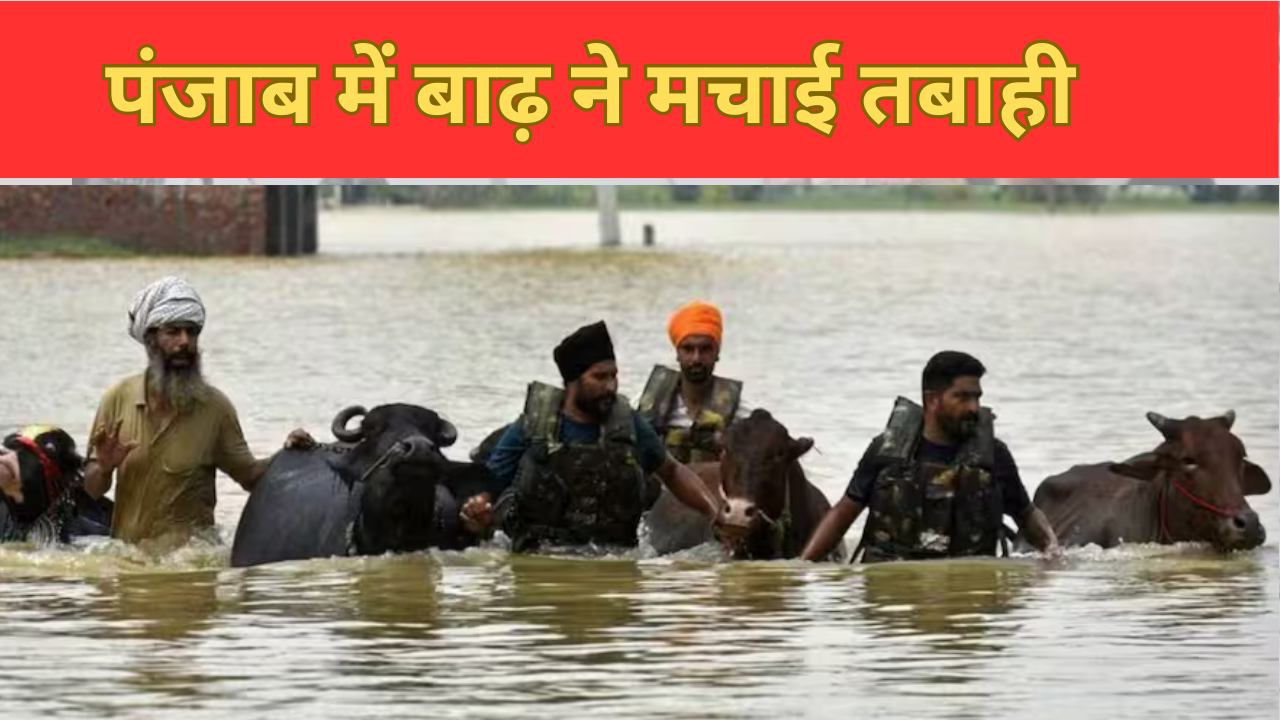
Punjab, once known as the “food-provider state” of India, is currently facing a terrible natural disaster. The situation has worsened due to continuous rains and rising waters in the rivers. Fields, houses, roads and lives—everything seems to be submerged in water. The government and administration are engaged in relief work, but the situation is extremely dire and this crisis is no less than a nightmare for the affected families.
Latest picture of devastation
According to the data so far, 23 districts of Punjab are affected by floods. About 1,400 villages are completely submerged in water, due to which the lifeline of the villages has come to a standstill. So far 30 people have died and about 3.5 lakh people have been directly affected. In rural areas, flood water has filled inside the houses, forcing people to migrate to safer places.
Due to continuous rain and rising water, road connectivity has been cut off at many places, bridges have been washed away and traffic is badly disrupted. The administration has evacuated people with the help of boats and helicopters at many places.
farmers’ trouble
This flood has caused the most damage to farmers. Crops like paddy and cotton got submerged in water. Crops on about 1.5 lakh hectares of land were destroyed. The hard work of many farmers throughout the year was wasted. They are now trapped in a deep financial crisis.
Farmers in Punjab floods say that they had spent a lot on seeds, fertilizers and pesticides. Now after everything has been washed away in the water, they have neither crops left nor the means to repay the loan.
Impact on people
Thousands of families had to leave their homes. About 20,000 people were evacuated to safer places. Electricity and mobile networks have also been cut off in many areas.
Government and relief efforts
In view of the situation, the Punjab government has declared the entire state as a flood-affected area.
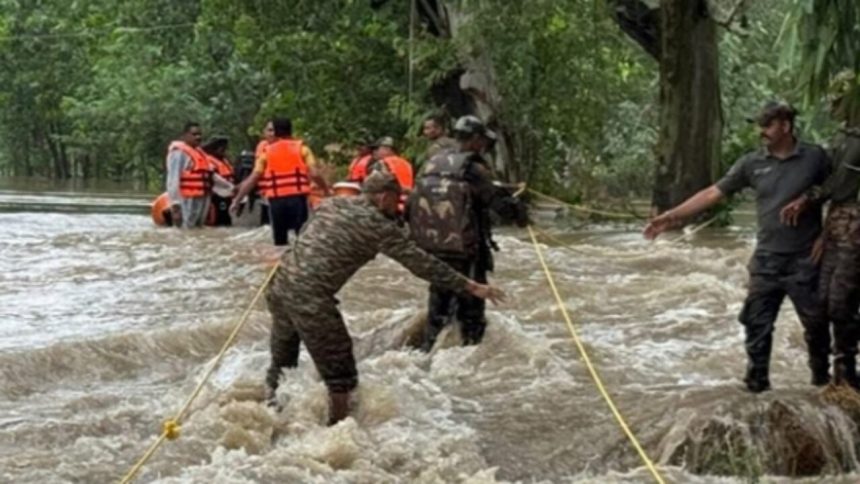
- Teams of NDRF, Army, BSF and Air Force have been deployed for relief and rescue operations.
- People are being pulled out of the water with the help of helicopters and relief material is being delivered.
- Medical camps have been set up so that sick and injured people can get immediate treatment.
- Schools and colleges have been ordered to remain closed till September 7, so that children remain safe.
The government has said that the affected families will be given rehabilitation and compensation. Also, the farmers will be compensated for the loss by surveying the fields and crops.
Politics and seeking help
Panjab floods – Politics has also intensified regarding the floods. Chief Minister Bhagwant Mann has demanded financial assistance of ₹ 60,000 crores from the central government. Congress leaders have demanded to declare it a national disaster.
On the other hand, Aam Aadmi Party (AAP) leaders have announced to donate their one month’s salary to the relief fund. Many social organizations and gurudwaras have also come forward to help, providing food, clothes and medicines to needy families.
Why was there so much loss?
Although the main reason for this disaster is the continuous rain, experts believe that many human negligences are also responsible for this.
- The drains and drainage systems were not cleaned on time, due to which there was no space for the water to flow out.
- Excessive urbanization and cutting of trees weakened the natural protective shield.
- Illegal construction on the banks of the rivers blocked the path of flood water.
- The nature of monsoon is also changing due to climate change, due to which sudden and excessive rain is happening.
That is, not only nature, but our wrong policies and negligence have also become a big reason for this disaster.
conclusion
Punjab is going through a difficult phase today. People’s lives, homes and agriculture are all in danger. This is not just a natural disaster, but also the result of our lack of preparedness and policies. Now is the time for the government, administration and the public to come together and not only deal with this crisis, but also make better preparations to avoid such disasters in the future, so that such a huge devastation can be avoided next time.