

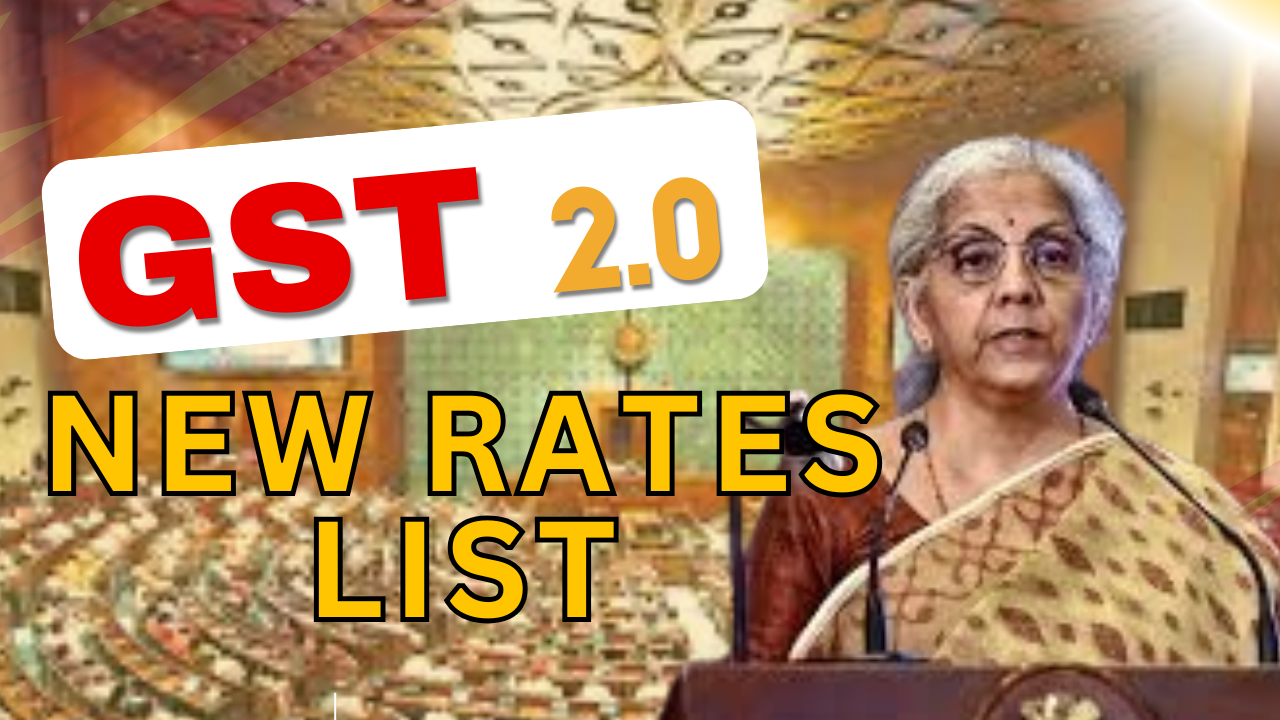
New GST Rates Full List 2025: The recent cuts in Goods and Services Tax (GST) have brought relief to several sectors, including automobiles, insurance, consumer appliances, pharmaceuticals, and renewable energy. However, the positive sentiment hasn’t been universal—while many welcomed the move, some expressed mixed feelings, and a few industries are openly dissatisfied with the changes.
The Modi government has announced a major change in GST rates as part of the second-generation economic reforms. Now, GST will be applicable under only two slabs – 5% and 18%. The GST Council has given unanimous approval to remove the 12% and 28% tax slabs.
A special 40% slab is kept only for luxury and “sin goods” like tobacco, gutkha, pan masala, high-end cars, and sugary drinks.
The increase in the new GST rate for labour charges, from 12% to 18%, has also led to some resistance, with small entrepreneurs saying that they would be hit hard by the change.
GST 2.0 is a double dose of support and growth for the nation and the next-generation reforms have been done to support India’s progress in the 21st century, Prime Minister Narendra Modi said on Thursday (September 4, 2025).
Earlier, Union Minister of Commerce and Industry Piyush Goyal urged the industry to make a strong twin commitment to the Prime Minister – first, to pass on every rupee of savings from the GST reduction to consumers, and second, to actively promote Indian products. He stressed the need to support products made with the sweat and toil of hardworking Indians, products nurtured in the soil of India.
GST Slab Comparison: Old vs New (with Product Examples)
| Product Category | Old GST Slab | New GST Slab (from Sep 22, 2025) |
|---|---|---|
| Essentials (e.g., hair oil, shampoo, toothpaste, soaps) | 12–18% | 5% |
| Daily food items (e.g., milk, paneer, bread, noodles) | 5–12% | Nil (0%) for many; 5% for others |
| Butter, ghee, cheese | 12% | 5% |
| Life & health insurance | 18% | Nil (0%) |
| Air conditioners, TVs, dishwashers, fridges, washers | 28% | 18% |
| Mobile phones, laptops | 18–28% (varied) | 18% |
| Small cars (<1200 cc), motorcycles (≤350 cc), other vehicles | 28% | 18% |
| Cement, auto parts, public transport vehicles | 18–28% (varied) | 18% |
| Luxury/sin goods (tobacco, pan masala, aerated drinks, yachts, helis, casinos, firearms) | 28% + cess | 40% (as a merged GST + cess slab) |
Read This Also:- Daily Skincare Routine for Oily Skin To Make Your Skin Glow
Essentials & Healthcare — Cheaper or Tax-Free
Zero GST (0%) on: Milk (UHT), packaged paneer, roti/paratha, etc. 33 life-saving medicines + drugs for cancer & rare diseases. Health insurance & life insurance premiums (including family floater plans).
Education supplies: notebooks, pencils, crayons, maps, exercise books.
Lower GST on Food & Household Items
5% GST on many foods/snacks (earlier taxed higher): Namkeens, instant noodles, chocolates, biscuits, fruit juices, edible oils, dried fruits, refined sugar, etc. 18% GST (down from 28%) on appliances like ACs, TVs, dishwashers, washing machines.
Automobiles & Transport
Small cars, two-wheelers (under 350 cc), trucks, buses → now 18% (earlier 28%). Auto parts standardized at 18%. EVs remain at 5%. Logistics & freight services → cut to 5%.
Agriculture Sector Benefits
5% GST on fertilizers (like ammonia, sulphuric acid, nitric acid), bio-pesticides, drip irrigation, sprinklers, agricultural machinery.
Coal & Energy
Coal GST raised to 18%, but the earlier cess of ₹400/ton is now merged into GST (no double taxation).
Support for MSMEs & Ease of Doing Business
Easier digital registration, faster refunds, simplified returns. Compensation cess stays on some items (tobacco, pan masala) until loans are cleared, then rates will normalize to 40%.
Why GST 2.0 Matters
The new GST 2.0 brings a big relief for everyone by making taxation much simpler with just two main slabs. It reduces the overall tax burden, especially for middle-class families, as essentials like food, home appliances, insurance, and even education become more affordable. Supports farmers & MSMEs. Boosts consumption & economic growth.